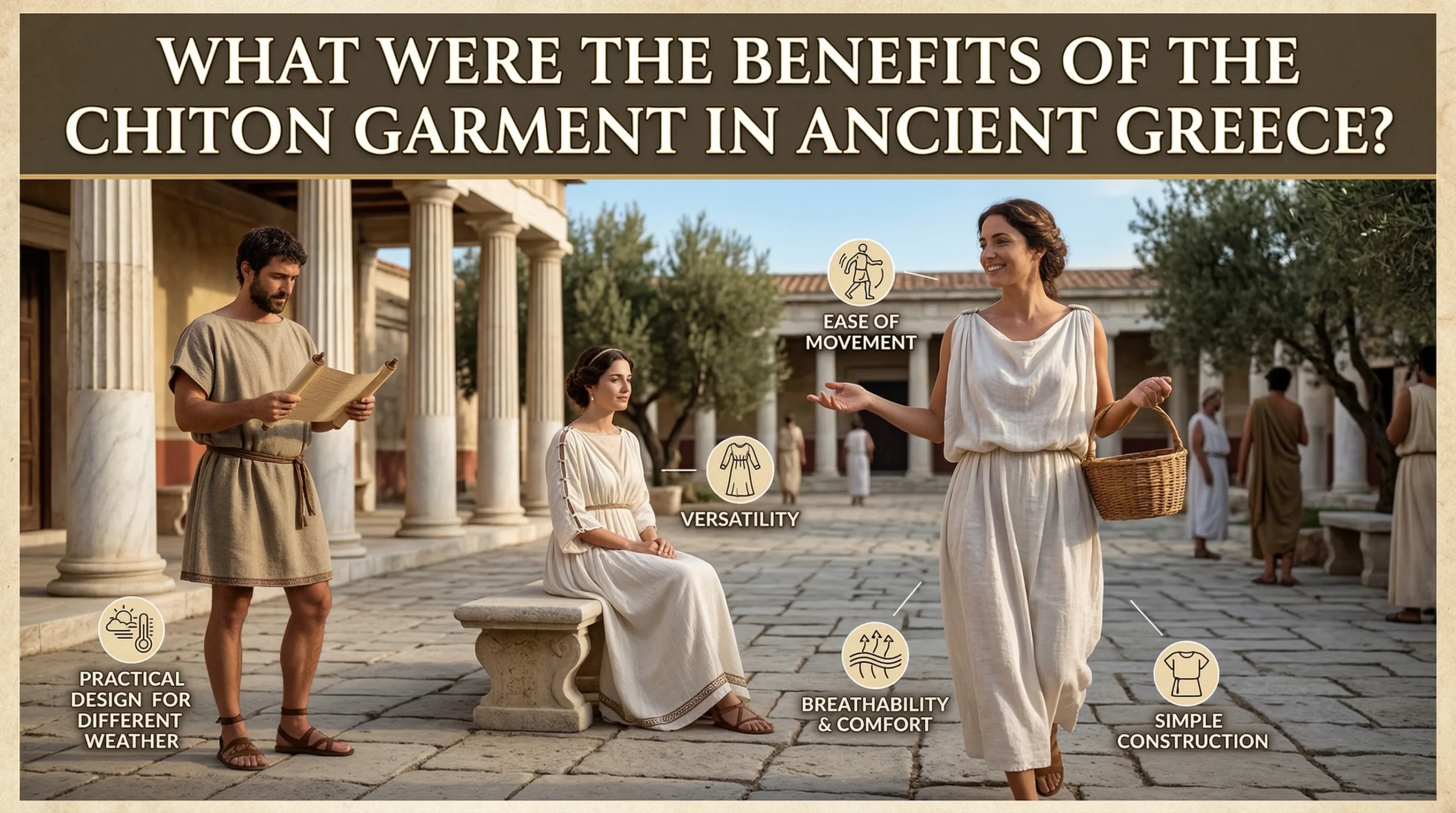

The chiton was one of the most common garments worn in ancient Greece. From the Archaic period (around 750 BCE) to the Hellenistic era, this simple yet functional clothing item was used by both men and women. Made mainly from linen or wool, the chiton offered comfort, flexibility, and social expression in everyday Greek life.
Its design was minimal yet highly effective, making it one of the most practical garments in ancient history.
Origins of the Chiton
The chiton was typically created from a single rectangular piece of fabric that was wrapped around the body. It was secured at the shoulders using decorative pins known as fibulae and often tied at the waist with a belt.
Historians believe the design may have been influenced by Eastern Mediterranean and Semitic clothing traditions, which later blended with Greek fashion.
Over time, two main types of chitons became popular:
- Doric Chiton – Usually made from wool and heavier fabric
- Ionic Chiton – Made from lighter linen or sometimes silk
Because the garment required very little stitching, it was easy to produce and practical for everyday wear.
Key Construction Features
| Feature | Description | Benefit |
|---|---|---|
| Material | Linen (Ionic) or Wool (Doric) | Breathable and comfortable in warm climates |
| Shape | Rectangular fabric draped around the body | Simple design with minimal tailoring |
| Fastening | Shoulder pins called fibulae | Adjustable and easy to wear |
| Length | Knee-length for men, ankle-length for women | Suitable for different activities |
| Sleeves | Sleeveless or lightly sleeved | Freedom of arm movement |
The simplicity of the chiton allowed it to remain both functional and elegant.
Comfort in Warm Mediterranean Weather
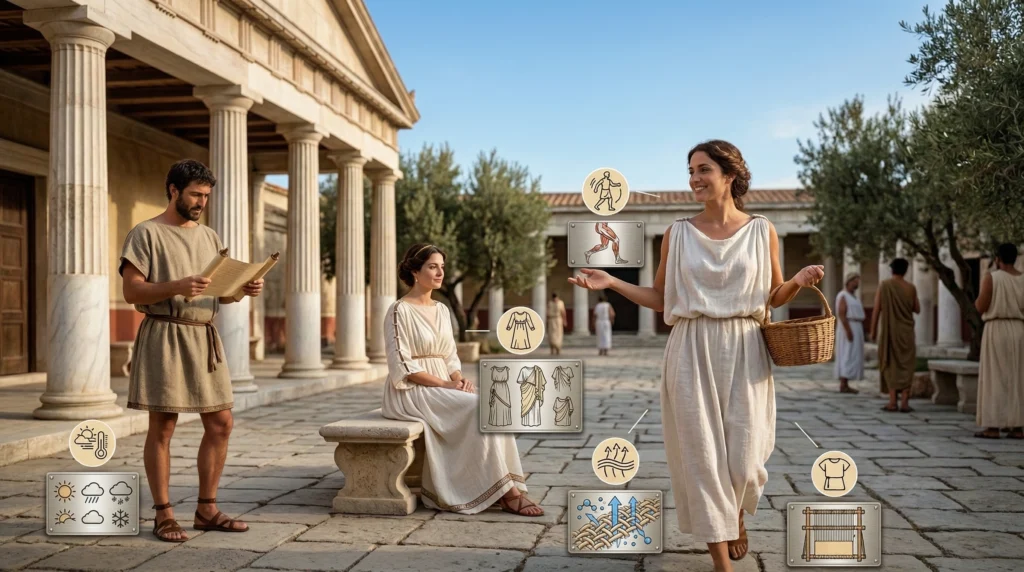
Ancient Greece experienced long, warm summers, so clothing needed to be breathable. The linen Ionic chiton allowed air to circulate easily, helping people stay cool throughout the day.
Unlike heavier garments, the chiton’s loose draping allowed natural ventilation, making it ideal for working outdoors, attending gatherings, or traveling.
Men often wore shorter versions that allowed them to move freely during daily tasks.
Versatility for Different Activities
One reason the chiton remained popular for centuries was its versatility. The garment could easily be adjusted for different situations by changing its length or layering it with other clothing.
| Activity | Chiton Style | Advantage |
|---|---|---|
| Farming or Labor | Short, belted chiton | Easy movement |
| Religious Ceremonies | Long and neatly pinned | Formal and modest |
| Social Events | Paired with a himation cloak | Elegant appearance |
| Sports and Athletics | Short and sleeveless | Maximum mobility |
This adaptability made the chiton suitable for people from all social classes.
Symbol of Social Status
Although the chiton had a simple design, its fabric and decoration often reflected social status.
Wealthier Greeks sometimes wore chitons made from fine linen or silk, while ordinary citizens typically wore plain wool versions.
Decorative elements such as embroidered patterns, colored borders, or elaborate brooches also indicated wealth and status.
Differences Between Men’s and Women’s Chitons
While both genders wore chitons, there were small variations in style.
Women usually wore longer chitons that reached the ankles, reflecting cultural expectations of modesty. The draped fabric created soft folds that enhanced the natural silhouette.
Men typically preferred shorter chitons that allowed greater freedom of movement, especially for work, travel, or athletic activities.
Economic and Practical Advantages
Another reason for the popularity of the chiton was its affordability and ease of production.
The garment required:
- minimal sewing
- a single piece of cloth
- simple fasteners
This meant households could easily produce their own clothing without complex tailoring.
Wool versions were also durable, allowing the garment to last longer and reducing the need for frequent replacements.
Artistic and Aesthetic Influence
The elegant draping of the chiton became a defining feature of ancient Greek art and sculpture. Many statues and pottery paintings depict figures wearing beautifully folded chitons that create a flowing, graceful appearance.
The garment’s timeless design later inspired various clothing styles in European fashion.
Health and Hygiene Benefits
Loose-fitting clothing like the chiton had several health advantages:
- Reduced skin irritation in hot climates
- Better airflow around the body
- Less friction during physical activity
Natural fabrics such as linen also helped absorb moisture, keeping the wearer comfortable during long days.
Cultural Importance in Greek Society
The chiton was not only practical clothing but also part of Greek culture and symbolism. It frequently appeared in mythology, artwork, and religious rituals.
Gods, heroes, and important figures in ancient Greek art were often depicted wearing stylized versions of the chiton, reflecting ideals of balance, simplicity, and harmony.
Comparison with Other Greek Garments
| Garment | Material | Mobility | Typical Use | Climate Suitability |
|---|---|---|---|---|
| Chiton | Linen or wool | High | Everyday clothing | Excellent |
| Peplos | Heavy wool | Medium | Ceremonial wear | Moderate |
| Himation | Wool cloak | Variable | Outer garment | Good for layering |
Compared to other garments, the chiton was the most practical choice for daily life.
Influence on Modern Fashion
Even today, the influence of the chiton can be seen in modern draped dresses, tunics, and flowing garments. Designers often draw inspiration from its simplicity and natural elegance.
Its design proves that ancient clothing could combine comfort, practicality, and beauty in a way that still resonates in modern fashion.